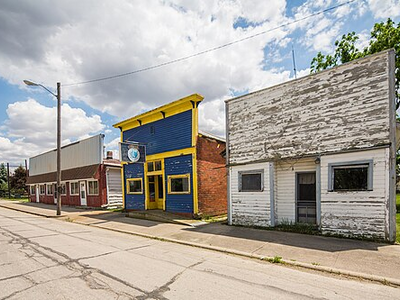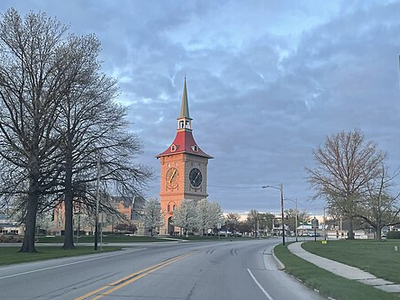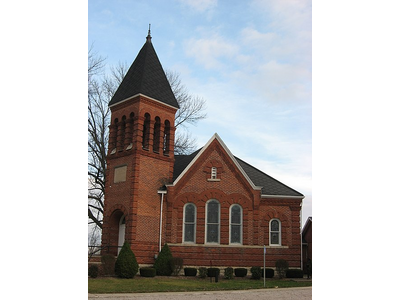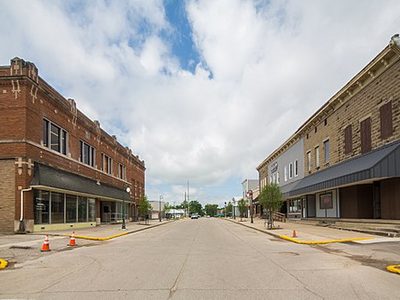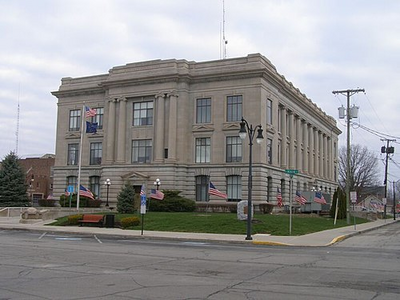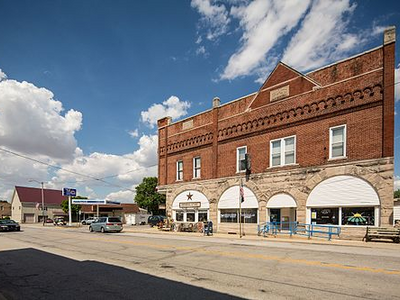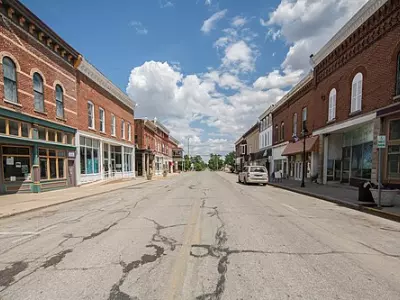
Geneva is a small town in the northeast of Indiana, which surprisingly has a lot to offer if you like to travel with the camera. The mix of historic buildings, quiet wetlands and open green spaces makes it a true playground for hobby and professional photographers. I like the city because it doesn't look over and you can catch a good picture almost everywhere. If you follow Sightseeing in Geneva seek, you will find here – and this with plenty of space for creative experiments.
I plan to crawl one or other highlight during the Civil Twilight – this is the moment when the first city lights flicker and the light is still soft. For classic Golden Hour I put the search term “golden light Geneva Indiana” in my app to find the best places. The Sunset over the few high-rise buildings of the surrounding area provides dramatic silhouettes that are well suited for dusk-ups. If Blue Hour I try long-term exposures from the illuminated bridges in Affolder Park. The map tool by poi‐travel.de, which is integrated in this text, shows you the position of the sun and gives azimut values – practically if you want to plan the direction of light exactly.
The Landmark is the heart of Geneva: a historical property with an extensive wetland made famous by Gene Stratton Porter. The moor offers mirror-smooth water surfaces that almost magically act in the morning light. Opening hours are from 9 a.m. to 5 p.m., admission costs $5 for adults, children free. You have the best photo possibilities shortly after sunrise when the light breaks through the trees. Insider tip: Take a tripod and walk along the wooden bridge – there you get clear reflections without crowds.
A small town park that is particularly suitable for evening recordings. The old wooden bridge over the brook is a popular spot for silhouettes during the Blue Hour. The park is open 24 hours, free admission. Early in the evening, when the lights of the city begin to shine, a beautiful contrasting game is created. Tip for locals: Use the lateral path to take into account the sun azimuth – this gives you the optimal orientation for long-term exposures.
A quiet place with wide meadows and a small lake, ideal for wide landscape views. The Landmark is particularly attractive in the late afternoon when the light colours the grasses golden. Opening hours: 7 a.m. to 9 a.m., free admission. If you want to catch the water, bring a pole filter to control reflections. Inside evidence: The northern edge of the lake offers an undisturbed view of the sky – perfect for star photography after the Blue Hour.
A nature reserve with dense forests and hiking trails, which is rarely crossed by tourists. The Landmark is located just outside the center, but this is worthwhile for mossed tree trunks in the morning fog. Opening hours: 6 am to 8 pm, free admission. For the best picture you should come early when the fog is still lying. Tip: A light rain makes the leaves shiny and gives your photos more depth.
A family-friendly park with playgrounds and a small amphitheater. The Landmark is interesting not only for children, but also for architecture photography – the modern benches and the open field offer clear lines. Opening hours: 8 a.m. to 10 a.m., free admission. The golden hour in the late afternoon lets the grass shine and produces beautiful shades. Insider tip: The hill behind the amphitheater gives you an overview of the entire park area – ideal for panoramic views.
A quiet cemetery that is simultaneously a nature reserve. The Landmark impresses with old oaks and artistic tombstones, which seem almost like sculptures in counterlight. Opening hours: 24 hours, free admission. For an atmospheric picture you should use the twilight when the light falls through the branches. Tip: Watch the seasons – in autumn the leaves are red and give your photos a warm flair.
A small town park with a historic pavilion that is often used for weddings. The Landmark is particularly attractive in spring when the cherry blossoms surround the pavilion. Opening hours: 7 a.m. to 9 a.m., free admission. You get the best shots Golden Hourwhen the light dips the flowers into a delicate pink. Inside evidence: The adjacent path leads to a hidden viewpoint across the river – a secret tip for calm water reflections.
Geneva combines charming Sightseeing in Geneva with a relaxed atmosphere that gives you enough time to find the perfect picture. Whether you want to capture the damp mood of the Limberlost Moor, the quiet water areas of the parks or the city lights at night – there is a suitable spot for every light hour. Pack your camera, use the map tool for the solar position and enjoy the diversity that this small city has to offer.
With the map tool, you can plan the ideal location for a photo online in advance – taking into account the sun's path and the surroundings.
Here's how it works:
Advantage:
You can assess light, perspective and location before visiting the site – ideal for photography, sunrises and sunsets.
To find the exact point where the sun disappears behind the skyline, use the azimuth display on poi-travel.de. In Geneva, the sun travels further northwest below the horizon in summer, while in winter it takes a more southwesterly angle. With the embedded line on the map, you can determine your tripod position down to the metre.
| Phase | Characteristics | Top Attractions in Geneva |
|---|---|---|
| Golden Hour | Warm, soft light shortly after sunrise or before sunset – ideal for warm colors and long shades. | Limberlost State Historic Site, Lehman Park, Linn Grove Park, Fields Memorial Park |
| Sunset | Dramatic, contrasting light, silhouettes and intense colours on the horizon. | Fields Memorial Park, Lehman Park, Affolder Park |
| Civil Twilight | Soft diffuse light after sunset, city lights begin to shine. | Affolder Park, White Oak Cemetery Nature Preserve, Munroe Nature Preserve |
| Blue Hour | Cool, blue tones shortly after sunset – perfect for long-term exposures and illuminated structures. | Affolder Park (bridge), Fields Memorial Park (north), White Oak Cemetery Nature Preserve |
| Photos | Settings (ISO/Blende/Zeit) | Professional tip |
|---|---|---|
| Limberlost State Historic Site | ISO 200 / f/8 / 1/125 s | use tripod, focus on reflections in the moor; Polfilter for reflection control. |
| Affolder Park (wood bridge) | ISO 400 / f/5.6 / 2‐4 s (long term) | Use a tripod and remote shutter; place the white balance on “cold” to emphasize the blue of the Blue Hour. |
| Fields Memorial Park (See) | ISO 100 / f/11 / 1/60 s (Golden Hour) | Use a polarization filter to soothe the water and saturate the sky. |
| Munroe Nature Preserve | ISO 800 / f/4 / 1/250 s | Early in the morning, catching fog; Focus on moss-covered trunks, background slightly unsharp. |
| Lehman Park (Amphitheater) | ISO 200 / f/5.6 / 1/200 s | Use the hill behind the Amphitheater for panorama; golden light for long shadows. |
| White Oak Cemetery Nature Preserve | ISO 400 / f/2.8 / 1/30 s | Focus on counterlight, wide open aperture for bokeh the branches; Tripod for stability at dusk. |
| Linn Grove Park (Pavillon) | ISO 200 / f/8 / 1/125 s | Golden Hour for delicate pinks; use the hidden viewpoint for reflections in the river. |
Just a short trip to Brookville, and you immediately feel like standing in another time. The old stone bridges over the Whitewater River capture the light quite strange – sometimes almost too grell, but that makes the recordings more interesting.
However, the cityscape of Madison is not immediately clear to everyone. The historic houses on the Ohio River seem a bit overrun, but this gives you the chance to experiment with long exposures and turn the water into a silk band.
A short trip to Versailles brings you to a small village that looks more like Kornfeld than tourist magnet. The vast fields in summer offer a calm blue that almost disappears in the background when you focus on the old barns.
If you want something greener, go to Brown County State Park. The forests there are not exactly new, but the play of light and shadow between the trees is always surprising. Sometimes the foliage is almost too dense, then you just have to move on a bit.
Short drive to Muncie, and you'll find the Ball State University campus feeling. The modern buildings are contrasted with the old brick houses in the city centre. This is a good place to document the transition between old and new.
A detour to Napoleon brings you to the Ohio River, where the industrial plants have a rough, almost industrial flair. The reflections in the water are sometimes too strong, but this can be tamed with a pole filter.
Nevertheless, a look at Centerville is worthwhile. The small cafés and the slightly weathered signs give the place a relaxed vibe. Here you can catch a bit of everyday life with Street-Photography, without having anything to do.
Finally a hint: The Hoosier National Forest is not just around the corner, but if you have a little more time, it's worth taking off. The paths are sometimes a bit discarded, but this gives you the opportunity to find unusual perspectives that nobody else sees.
Villages, towns, districts, places and Vacation destinations you should visit.
©copyright by POI-Travel.de
info@poi-travel.de