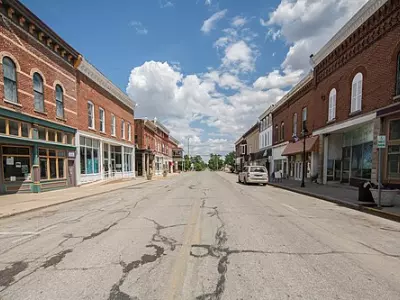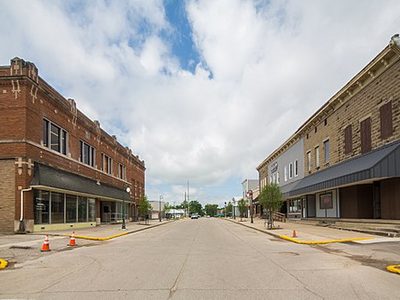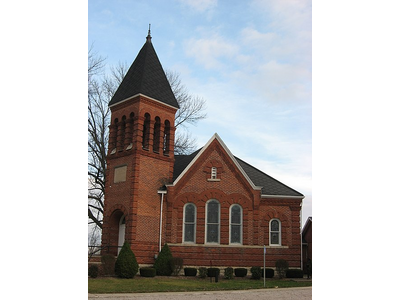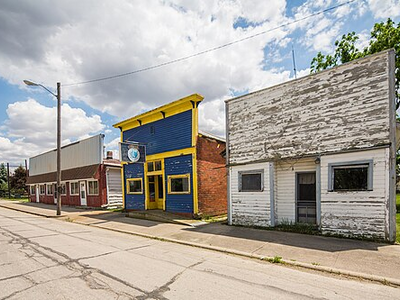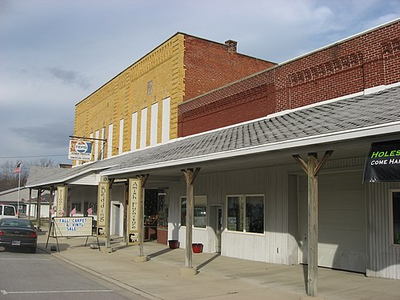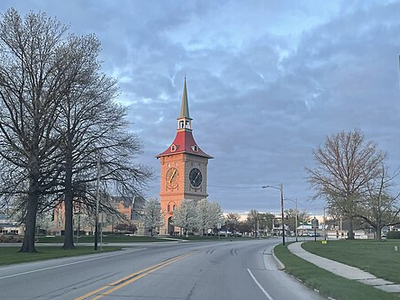
Berne is located in the heart of the Amish countryside and has a surprisingly lively visual language. The small alleys, the historical façades and the wide fields offer contrasts that appeal to any hobby photographer. I like the city because it looks calm, but at the same time many small details are hidden, which are only noticeable when watching. If you follow Sightseeing in Berne search, you will quickly notice that each corner is a potential photo motif.
To get the best picture, you need to know the light phases:
The map tool of poi‐travel.de is embedded under this text and shows you the solar position, the azimut angle and the direction of the light beams – practical if you want to plan your composition in advance.
The Muensterberg Plaza is the central heart of the city and at the same time the main attraction in Berne, Indiana. The open area with the striking bell tower offers clear lines and an open field of view, which is well suited for city recordings. In particular, Golden Hour throws the light long shadows that emphasize the historical facades. The Plaza is open 24 hours a day, entrance costs nothing. Practical tip: In the morning less will be done so you can catch the empty patch without crowds. Insider proof: The small fountain in the center reflects the light particularly beautiful when the sun is deep.
Lehman Park is a popular meeting place for families, but for photographers an underestimated jewel. The extensive lawn, the old oaks and the small amphitheater create varied picture compositions. During the Blue Hour the illuminated paths create a gentle lighting that is well suited for long-term exposures. The park is open daily from sunrise to sunset, free admission. Practical note: The lake in the northern part reflects the evening red particularly well. Insider tip: On the hill behind the amphitheater you have a wide view over the city – perfect for panoramic shots.
The Limberlost State Historic Site is the most famous nature conservation attraction in the area of Berne. Moor landscapes, old trees and a historical visitor centre meet here. The soft light of the Golden Hour lets the bog shine in warm tones and highlights the texture of the reed. The grounds are open daily from 9 a.m. to 5 p.m. from April to October, and the entrance costs $5 for adults. Practical tip: The wooden ridge above the water offers a stable position for long-term exposures. Insider proof: In autumn, the trees turn into a deep red, which has a particularly dramatic effect in counterlight.
This nature reserve is another highlight for nature photographers. The vast swamps, rare bird species and the quiet water areas offer numerous motifs. During the Civil Twilight the first lights appear above the water, which leads to atmospheric silhouettes. Access is free, the terrain is open from sunrise to sunset. Practical note: The observation tower in the southern part gives you an increased view over the swampland. Insider tip: Early in the morning there is often fog that makes the picture almost fairytale.
Fields Memorial Park is a small but fine place that is often overlooked. The well-maintained flower beds, the historical monument and the narrow gravel paths create a quiet ambience. In particular, Blue Hour the illuminated paths create a gentle lighting that is well suited for long-term exposures. The park is open daily from 6 am to 10 pm, free admission. Practical note: The monument in the centre is a good foreground for portrait recordings. Insider tip: If you're here on the weekend, there are often local musicians who provide extra atmosphere.
Affolder Park is located just outside the city centre but offers a wide view over the fields of Berne. The wide green areas and the old barn form a classic rural photo background. During the Golden Hour the deep sunlight casts long shadows that emphasize the structure of the barn. The park is free and accessible 24/7. Practical note: The small wooden ridge at the Westende is ideal for silhouette recordings. Insider tip: In summer, wild poppy flowers flourish there, which are a red colour stick in the picture.
Four‐H Park is a modern amusement park with playgrounds, sports facilities and a small lake. The combination of urban and natural environment makes it a versatile Landmark for photographers. During the Blue Hour the water of the lake reflects the city light and produces interesting reflections. The park is open daily from 7 am to 9 pm, free admission. Practical note: The small pavilion at the lake shore offers protection from wind for long-term exposures. Insider tip: On the weekend there are often local sports events that allow additional action shots.
Berne combines charming city architecture with expansive natural landscapes, so that you as a photographer always new Sightseeing in Berne to discover. Whether you are the soft light of the Golden Hour want to capture historical buildings or the calm atmosphere of the Blue Hour search over the wetlands – the city offers suitable spots for every light mood. Pack your camera, use the poi‐travel.de card tool and surprise you with the many photo possibilities.
With the map tool, you can plan the ideal location for a photo online in advance – taking into account the sun's path and the surroundings.
Here's how it works:
Advantage:
You can assess light, perspective and location before visiting the site – ideal for photography, sunrises and sunsets.
To find the exact point where the sun disappears behind the skyline, use the azimuth display on poi-travel.de. In Berne, the sun travels further northwest below the horizon in summer, while in winter it takes a more southwesterly angle. With the embedded line on the map, you can determine your tripod position down to the metre.
| Phase | Characteristics | Top attractions in Berne |
|---|---|---|
| Golden Hour | Warm, soft light shortly after sunrise or shortly before sunset; long shadows emphasize structures. | Muensterberg Plaza, Limberlost State Historic Site, Affolder Park |
| Sunset | Intensive colour change, strong red and orange tones, short moment of high contrasts. | Muensterberg Plaza, Four‐H Park |
| Civil Twilight | First city lights, light blueprint, ideal for city panoramas with gentle lighting. | Swamp Wetlands Preserve, Fields Memorial Park, Four‐H Park |
| Blue Hour | Deep blue dusk after sunset, perfect for long-term exposures and reflections. | Lehman Park, Fields Memorial Park, Four‐H Park |
| Photos | Settings (ISO/Blende/Zeit) | Professional tip |
|---|---|---|
| Muensterberg Plaza | 100 / f/8 / 1/200 s | Use the bell tower motif as a central element; incorporate the fountain for reflections at Golden Hour. |
| Lehman Park | 200 / f/5.6 / 10 s (Stativ) | Use the lake in the foreground and use a light counterlight illumination during the Blue Hour. |
| Limberlost State Historic Site | 400 / f/4 / 1/125 s | Focus the wooden ridge above the water; at Golden Hour emphasize the bog in warm tones. |
| Swamp Wetlands Preserve | 800 / f/2.8 / 15 s (Stativ) | Use the observation tower for silhouettes; while Civil Twilight captures the first lights above the water. |
| Fields Memorial Park | 200 / f/5 / 8 s (Stativ) | Use the monument as a foreground; use the illuminated paths for gentle light tracks at Blue Hour. |
| Affolder Park | 100 / f/11 / 1/250 s | positioning the old barn in the image detail; Golden Hour creates long shadows and emphasizes the structure. |
| Four-H Park | 400 / f/4 / 12 s (Stativ) | Use the lake for reflections of the city light during the Blue Hour; the pavilion offers wind protection for long-term exposures. |
However, Indianapolis is only half an hour away and offers a surprisingly wide spectrum of images – from the wide boulevards to the quiet corners in the White River State Park, where the water sometimes works quite quietly.
In Columbus, which is not far from the highway, the unusual buildings dominate by the local architects. The clear lines and the game with light and shadow give every image a modern touch.
Franklin looks like a typical Midwest town at first glance, but the old brick buildings on Main Street have character. Particularly in the case of fog in the morning, a slightly washed-out image is created, which almost already looks painted.
Shelbyville has a small river that sounds through the city. The bridges there are not spectacular, but the calm water reflects the surrounding trees – ideal for quiet landscapes.
Greenfield is located a bit further east, but the fields all around offer wide horizons. When the light dances over the ears, silhouettes are created that look almost too big.
Noblesville has an old industrial area that is now partly converted into lofts. The rusty facades and the graffiti walls give a rough feeling that fits well with contrasting photos.
Carmel is known for his sculptures in public space. Some of them are in the middle of the park, surrounded by trees – a bit like a quiet museum outdoors.
Westfield has a large shopping center, but the surrounding suburbs show typical suburban scenes: empty parking spaces, lonely trees, a bit of everyday life that is well suited for street photography.
Anderson on the White River has an old railway station building, which today serves as a café. The combination of historical architecture and modern life creates interesting picture compositions.
Muncie, a little further south, has the Ball State University campus area. The old auditoriums and the extensive green areas offer both architectural and natural motifs.
Villages, towns, districts, places and Vacation destinations you should visit.
©copyright by POI-Travel.de
info@poi-travel.de