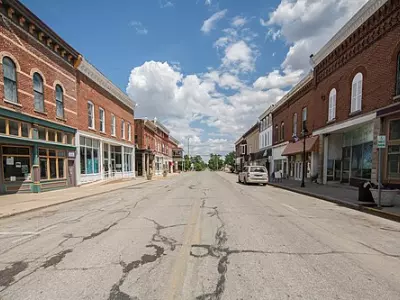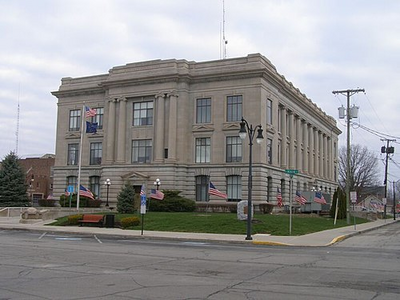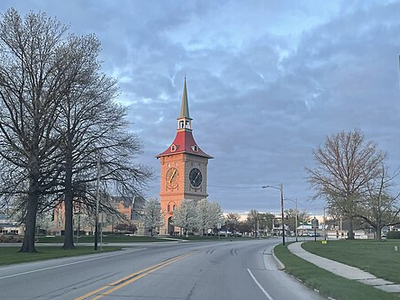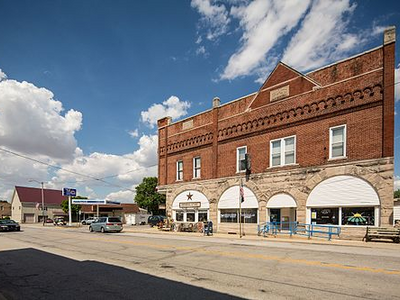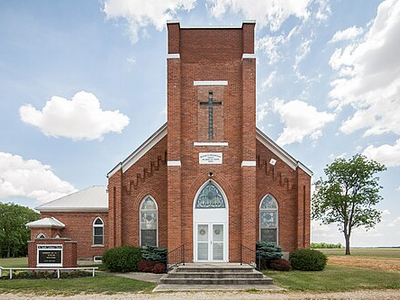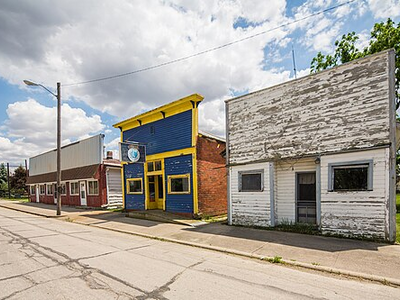
Bryant is located in the heart of Indiana and at first glance looks rather at the suburbs, but nature around it is a real find for picturemakers. I like the city because it is surprisingly quiet and you find good lighting everywhere. The Sightseeing in Bryant offer varied motifs – from silent swamps to small town squares with charming lights.
To get the best photo, I plan my recordings after the natural light phases. Civil Twilight provides the first shimmer of city lights, ideal for city panoramas. The Golden Hour is my keyword for warm, soft light – especially good for recordings in the Limberlost Bird Sanctuary. The Sunset I start the dusk over the few buildings, that gives dramatic silhouettes. The Blue Hour I use for long-term exposures at White Oak Cemetery Nature Preserve, where the blue light is almost magical. The map tool of poi‐travel.de, which is embedded under this text, shows the position of the sun and indicates the azimuth (horizontal angle) – practically to determine the direction of the sun exactly.
This nature reserve is the heart of nature photography in Bryant. Here, rare bird species and dense swamps come together, which in fog almost seem like a painting. The main attraction is the extensive wetland with wooden bridges that lead over the water – perfect for reflections. Opening hours: daily from 8 am to 6 pm, free admission. In the early morning, shortly after Civil Twilight, the light conditions are particularly clear, and the birds are active. Insider tip: Take a telephoto lens and look for the colorful peacocks that like to show themselves in the reed areas.
The historical site preserves the heritage of the 19th century It offers old wooden huts surrounded by oaks. The interplay of old wood and moss-grown stones creates interesting textures for detail. Opening hours: May to October, 9 a.m.–17 p.m., admission 5 USD. The Golden Hour in the late afternoon the wood leaves warm. Tip for professionals: Use a tripod and experiment with long-term exposure to capture the light play between the trees.
Another wetland which is particularly suitable for macro photography. The water surfaces mirror the sky, and the small amphibians are a highlight for animal recordings. Free admission, opening hours like the Bird Sanctuary. The best light conditions are shortly after sunrise when the water is still calm. Insider proof: The small wooden ridge in the southwest of the park offers an elevated angle of view, ideal for panoramic shots.
This nature reserve is less visited, which means that you can take undisturbed pictures here. The wide margins and dense reeds provide dramatic silhouettes with counterlight. Opening hours: all year round, 7 a.m.–20 a.m., no admission. The Blue Hour after sunset creates a deep blue color play that works particularly well with long-term exposure. Tip: Bring an ND filter to soften the water.
A small town park with a pretty pond and an old bridge. The bridge is the main attraction for picture compositions because it divides the water into two halves. Opening hours: daily, 6 am to 22 pm, free of charge. The Golden Hour throws a warm light on the stone bridge that produces reflections in the pond. Insider tip: Early in the weekend it is quieter and you can photograph the water without crowds.
A cemetery that is run as a nature reserve – unusual, but a real photo pot. Old oaks and weathered tombstones create a melancholic mood, especially in dam light. Opening hours: 8 am to 17 pm, free admission. The Blue Hour provides a deep blue that emphasizes the silhouettes of the trees. Tip: Use a wide angle lens to capture the wide rows of gravestones, and look for lichens for texture details.
A wooded area with several hiking trails that lead to small waterfalls. The main photo spot is the 15 meter high waterfall in the northern part of the park. Opening hours: 7 am to 19 pm, free admission. The waterfall is best during the Golden Hour to photograph when the light dips the falling water into golden rays. Insider proof: The path behind the waterfall offers a view from behind, ideal for silhouette recordings.
The combination of quiet natural areas, well preserved historical sites and flexible lighting conditions makes Bryant an underestimated destination. The Sightseeing in Bryant finds numerous photo stands for sunset, blue hour and night photography. Pack your camera, use the map tool for the position of the sun and enjoy the relaxed atmosphere – the result is pictures that tell more than just a place.
With the map tool, you can plan the ideal location for a photo online in advance – taking into account the sun's path and the surroundings.
Here's how it works:
Advantage:
You can assess light, perspective and location before visiting the site – ideal for photography, sunrises and sunsets.
To find the exact point where the sun disappears behind the skyline, use the azimuth display on poi-travel.de. In Bryant, the sun travels further northwest below the horizon in summer, while in winter it takes a more southwesterly angle. With the embedded line on the map, you can determine your tripod position down to the metre.
| Phase | Characteristics | Top Attractions in Bryant |
|---|---|---|
| Golden Hour | Warm, soft light, ideal for landscapes and details. | Limberlost Bird Sanctuary, Limberlost State Historic Site, Affolder Park, Munroe Nature Preserve |
| Sunset | Dramatic silhouettes, intense color play. | Limberlost Bird Sanctuary, Limberlost Swamp Wetlands Preserve |
| Civil Twilight | First shimmer of city lights, good for city panoramas. | Affolder Park, Limberlost Bird Sanctuary |
| Blue Hour | Cool, deep blue light, perfect for long-term exposures. | White Oak Cemetery Nature Reserve, Loblolly Marsh Nature Preserve |
| Photos | Settings (ISO/Blende/Zeit) | Professional tip |
|---|---|---|
| Limberlost Bird Sanctuary | 400 / f/5.6 / 1/250 s | Use telephoto lens, focus birds in reed, capture reflections in the water. |
| Limberlost State Historic Site | 200 / f/8 / 1/125 s | Use tripod, long-term exposure for light play between trees during Golden Hour. |
| Affolder Park (Steinbrücke) | 100 / f/11 / 1/60 s | Early in the evening, catch reflections in the pond, aperture for sufficient depth of field. |
| White Oak Cemetery Nature Preserve | 800 / f/4 / 30 s | Wide angle, tripod, blue light emphasizes silhouettes – record to Blue Hour. |
| Loblolly Marsh Nature Preserve | 400 / f/5.6 / 15 s | Use ND filters to soften the water; Use Blue Hour for the color game. |
| Munroe Nature Preserve (waterfall) | 200 / f/5.6 / 1/200 s | Golden Hour, lateral view for golden rays, tripod for stability. |
| Swamp Wetlands Preserve | 400 / f/5.6 / 1/250 s | Early after sunrise, calm water for reflections, macro lens for amphibians. |
Bloomington is just a bit south. The Indiana University Campus architecture is a mix of brick and glass façades that almost already develop their own lives in different lights. The Campus Lake reflects the morning red, and the surrounding trees provide a natural framework for portraits.
However, the city center of Bloomington is not always what one expects from a photo city – it sometimes seems to overflow, especially on weekends. Nevertheless, there are small alleys where graffiti and old shop fronts create a rough, urban feeling.
Nashville, Indiana, is a short trip north. The old railway bridge over the Salt Creek is a popular motive for long-term exposure when the water shimmers below it. The surrounding fields show a colour play in autumn, which is well suited for landscape photography.
Bedford, about an hour west, has an industrial heritage. The old quarries and the rough masonry of the factory buildings give a sense of history that can be easily combined with modern compositions. The city is quite relaxed, almost like a silent observer.
Columbus, Indiana, is a bit further, but the architecture there is a real magnet for photographers. The clear lines of the buildings designed by famous architects put strong contrasts to the surrounding trees. You can easily switch between minimalist images and detailed close-ups.
French Lick, a small resort in the southwest, offers not only the well-known thermal baths but also abandoned pensions and a weathered casino building. The light that falls through the broken windows creates interesting shadow patterns – perfect for atmospheric images.
The Hoosier National Forest is located south of Bryant and is a paradise for nature photographers. The dense forests, clear streams and occasional viewpoints give plenty of room for compositions. Sometimes it's a bit too wild, but that's what makes the appeal.
Brown County State Park, not far away, is famous for its autumn colors. The hilly landscape is almost painted when the leaves shine in red and gold tones. In the morning there are hardly any visitors there, so you can work undisturbed.
A short trip to Indianapolis is possible if you are ready to drive a little more. The skyline with its glass facades offers an urban counterpart to the rural motifs. The Canal Walk along the river is a quiet place to photograph reflections.
Villages, towns, districts, places and Vacation destinations you should visit.
©copyright by POI-Travel.de
info@poi-travel.de