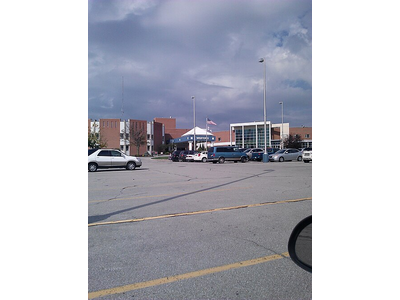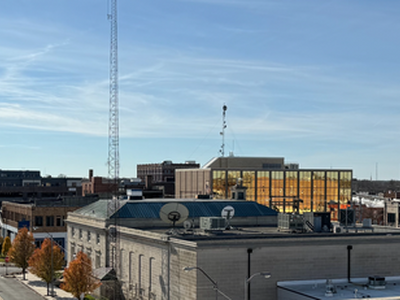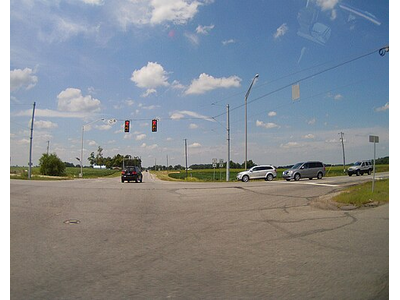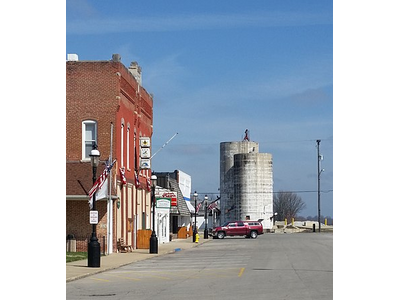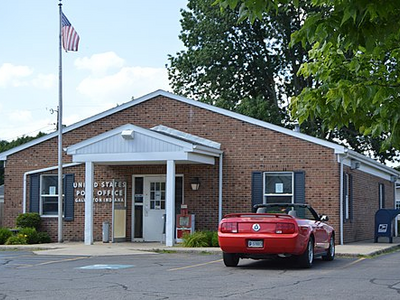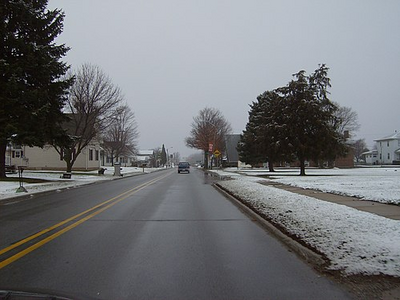
Russiaville is located in the heart of Indiana and surprises with a mix of small cityscapes and open green spaces. The streets are wide enough to put a tripod, and the light often works clear and contrasting. I like the city because it is not overrun and you can catch almost any motive in peace. For hobby photographers, this is a real plus point.
To get the best photo, I plan my recordings after the natural light phases.
The map tool of poi‐travel.de, embedded under this text, shows you the position of the sun and indicates the azimuth (horizontal angle). This allows you to exactly plan the direction of the sun.
The museum in the old town hall is the central cultural and historical centre of the city. The brick façade with its large windows offers interesting lines and reflections, especially in counterlight during the Blue Hour. Opening hours: Tuesday-Friday 10-16, Saturday 10-14, free admission. Insider tip: In the morning there is hardly any visitor, the light then falls on the side of the door, which throws beautiful shadows.
A small town park with a pond, a bridge and many trees. The pond reflects the evening red, the bridge acts like a natural frame. Opening hours: All year round, 24 hours, free. Best time: Golden Hour when the water takes up the light. Insider tip: In autumn the trees are red-orange, which gives extra contrast.
The park is known for its sculpture “The Pioneer” and wide green areas. The sculpture casts long shadows with deep sun, which are well suited for silhouettes. Opening hours: 6 a.m.–22 a.m., free admission. Insider tip: During the Blue Hour, the work of art shines from the surrounding lanterns, a rare effect.
A camp terrain with wooden stands and a small lake. The wooden structures give a rustic feeling that has a particularly dramatic effect on counterlight. Opening hours: Depending on the season, usually from May to September, entrance after registration. Best time: Civil Twilight when the campfires are lit – great light sources for long-term exposures.
The park is located on the outskirts of the city and offers wide fields, an old barn building and a gravel path. The path leads the eye to the distance, ideal for perspective shots. Opening hours: 24 hours, free. Insider tip: In the late spring, wild flowers flourish along the way, which gives colour accents.
A small but well maintained dog playground with colorful benches and a small ramp. The coloured benches offer lively accents for street photography. Opening hours: 7 o'clock-20 o'clock, free of charge. Best time: Golden Hour when the light intensifies the colors.
A quiet residential park with many trees, a small pavilion and a gravel path. The pavilion is a popular place for portraits because the roof provides a soft, diffuse light. Opening hours: 24 hours, free. Insider tip: After rain the headstone plaster shines, which reflects the light particularly beautiful.
The park has a small amphitheater and a fountain. The fountain produces sparkling highlights at sunset, which are well suited for detail shots. Opening hours: 8 a.m.–22 a.m., free. Best time: Blue Hour when the water reflects the blue light.
Russiaville combines small town halls with versatile photo possibilities, from historical façades to quiet green areas. The light phases can be easily planned, and thanks to the free map tool you always have the sun in sight. A few days are enough to capture the whole spectrum of images – from Golden Hour to Sunset to Blue Hour.
With the map tool, you can plan the ideal location for a photo online in advance – taking into account the sun's path and the surroundings.
Here's how it works:
Advantage:
You can assess light, perspective and location before visiting the site – ideal for photography, sunrises and sunsets.
To find the exact point where the sun disappears behind the skyline, use the azimuth display on poi-travel.de. In Russiaville, the sun travels further northwest below the horizon in summer, while in winter it takes a more southwesterly angle. With the embedded line on the map, you can determine your tripod position down to the metre.
| Phase | Characteristics | Top Attractions in Russiaville |
| Golden Hour | Warm, soft light – ideal for portraits and reflective water surfaces. | Brady Park, Floury Dog Park |
| Sunset | Dramatic colors, long shadows, especially in clouds. | Berkley Park |
| Civil Twilight | First city lights, silhouettes, ideal for long term exposures. | YMCA Camp Tycony |
| Blue Hour | Cool blue, lights stand out – perfect for night recordings. | Russiaville Historical Museum, Robert M. Waddell Memorial Park, Berkley Park |
| Photos | Settings (ISO/Blende/Zeit) | Professional tip |
| Russiaville Historical Museum | ISO 200 / f/5.6 / 1/60 s | Use counterlight during the Blue Hour to highlight the brick facade as a silhouette. |
| Brady Park | ISO 100 / f/8 / 1/125 s | Position the camera so that the bridge reflects the golden light; a pole filter reduces reflections in the water. |
| Robert M. Waddell Memorial Park | ISO 400 / f/4 / 1/30 s | Put the sculpture in the foreground while the lanterns illuminate the artwork during the Blue Hour. |
| YMCA Camp Tycony | ISO 800 / f/2.8 / 5 s (Stativ) | Use the storage fire as the main light source; a long-term exposure produces soft light tracks. |
| Burlington Park | ISO 200 / f/11 / 1/250 s | focus the gravel path to generate depth; select a small aperture for maximum depth of focus. |
| Flour dog park | ISO 100 / f/5.6 / 1/200 s | Use the coloured benches as a colour accent; photographs in counterlight for living silhouettes. |
| Floury park | ISO 200 / f/4 / 1/80 s | After rain, the headstone plaster creates a brilliant reflection play – ideal for portraits under the pavilion. |
| Berkley Park | ISO 400 / f/2.8 / 1/30 s | photograph the fountain during the Blue Hour; the water reflects the cool blue and produces star lights. |
However, Kokomo is not only an industrial center, but also a collecting tank for abandoned factory grounds, where the light falls through rusty windows and throws interesting shadows. The old warehouses often have graffiti, which is almost an independent motif.
A short trip to Peru will take you to the Wabash River. There is a small ridge that almost disappears when flooding – perfect for long-term exposures when the water runs over the planks.
West Lafayette sometimes acts overrun, but the Uni-Campus architecture has corners that are easily overlooked: a weathered brick building that looks almost transparent in the backlight. There you can experiment with little human resources.
If you like nature, go to Shades State Park. The forest is dense, the paths are partly muddy, and the light that breaks through the foliage creates an almost cinematic pattern. A little mud is okay, the picture gets character.
Delphi is a bit off, but the old main road has a few abandoned shops whose shop windows still carry old signs. This is a good motive for Street-Photography if you want to capture the feeling of “dead time”.
Greencastle has a small but fine railway museum. The tracks that lie there are overwhelmed by weeds, and this gives an interesting contrast play between metal and green. You can also photograph old locomotives that look almost like sculptures.
A detour to Bloomington leads you to St. John’s Church, which looks almost like a dilapidated castle from a distance. The surrounding cemetery is quiet, the tombstones are covered by moss – a place that radiates tranquility, but is still photogenic.
Finally a hint about Terre Haute: The Ohio River offers a wide colour play at sunset, which is reflected in the water. The bridge there is not overrun, and you can hold the light play almost without people in the picture.
Villages, towns, districts, places and Vacation destinations you should visit.
©copyright by POI-Travel.de
info@poi-travel.de