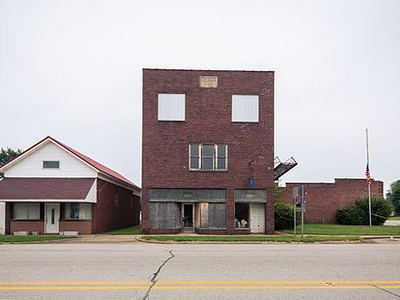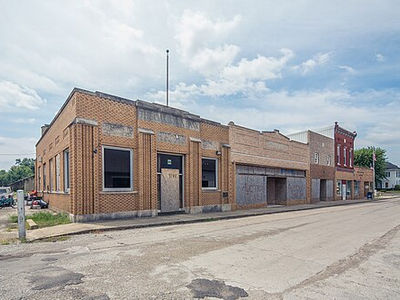
Honestly, if you're looking for "Bicknell Sights", you don't get a tourist paradise right now, but that's just what I love about this little spot Indiana. Founded in 1869 as a railway hub, Bicknell has never lost its modest size – and that is kind of refreshing. The city is located in the heart of Vigo Township, which in turn is embedded in rural Knox County; that sounds like an address you only find in a dusty atlas, but the approach is surprisingly uncomplicated: a short trip from the US‐41, then a few minutes on the County Road 400 N, and you are in the middle of what is happening – when you define events with “a few houses, a post office and a barbecue area”.
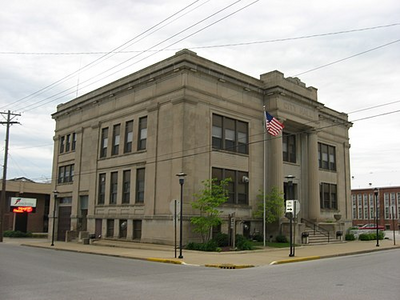
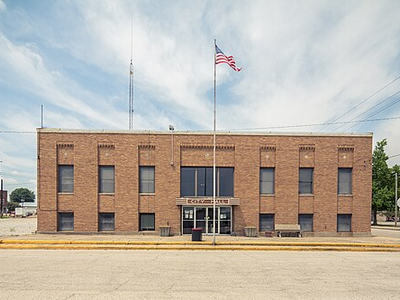
I don't understand the hype around the big metropolises, but there's a small café that has more charm than some hipster shops in Chicago, and that's a real profit for me. If you're on the road by car, just park in front of the old town hall – that's convenient because you can then instantly suck up the historic flair of the 19-year old brick building while you enjoy a coffee that tastes better than what you get in the chains. And yes, Bicknell's sights are not just what you find on a map, but the feeling that you are in a place that doesn't feel too much about your Instagram feed.
With the map tool, you can plan the ideal location for a photo online in advance – taking into account the sun's path and the surroundings.
Here's how it works:
Advantage:
You can assess light, perspective and location before visiting the site – ideal for photography, sunrises and sunsets.
To find the exact point where the sun disappears behind the skyline, use the azimuth display on poi-travel.de. In Bicknell, the sun travels further northwest below the horizon in summer, while in winter it takes a more southwesterly angle. With the embedded line on the map, you can determine your tripod position down to the metre.
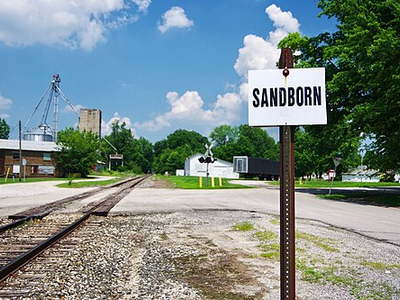
The old railway shed on the edge of Bicknell, which today offers more rusty silence than pulling sounds, is the perfect start for me to understand why the surrounding area is so peculiar here. As I stood there and heard the crunching of my shoes on the weathered wood, I noticed that the only thing that still runs here regularly is the water of the nearby Wabash River – a river that swells through the country, as if he wanted to show all the tourists that he was here long before they even spoke of “sights”.
A short trip across the Bicknell Bridge leads directly to one of the best spots for fishing, if you are not busy collecting local stories. Parking is usually easy, except on Saturday night, there will be a real problem – then the cars are like forgotten boats on the shore, and you have to go a bit further to the river. I caught a huge carp there that was so strong that he almost tipped the boat; that was the only time I felt the river would challenge me personally.
A few miles south is the Patoka Lake, an artificial lake, which is called “the place where the real Indiana is found” by Angles, Boaters and Picnicians. I have to admit, I don't understand the hype about the glittering water surface – the water is often cloudy in the summer, and the boats look like they were stolen from an 80s campaign film – but the calm in the early morning when the fog floats above the lake is real magical. Practical: Access to the boat dock is free, and parking is best done on the less frequented sides, otherwise you fight for a place between the caravans.
A little further north, almost like a secret club for hikers, lies the Shades State Park. The sandstone rocks here have something unprecedented that reminds me every time that nature has not been built here for Instagram, but for real adventures. I discovered a path that was so narrow that I almost thought I would look through a keyhole into the past. The path leads to a small waterfall that is hardly larger than a sink, but the silence there is almost tangible – a perfect place to turn off the phone and sort your own thoughts.
If you have enough of quiet forests, the way to the east leads to the legendary Turkey Run State Park. The ravines here are so deep that the echo of your voice sounds as if another visitor recalls from another time. I remember a day when I lost myself in one of the narrow rocks and was almost “smelled” by a curious raccoon that showed me the way back to the main track – an animal guide that clearly knew more about the terrain than I did. The park is well signposted, but parking can quickly become a small adventure on weekends if you try to get a free space between the family-camping buses.
A short trip to Vincennes, about half an hour drive, opens the George Rogers Clark National Historical Park. Here the story of Indiana is almost staged to a show, complete with postings and plaques that tell more about the city's self-image than about the actual events. I met a leader there who explained with an eye-catcher that the “big battles” here are more a pretext for a good beer in the nearby pub. Practical: The entrance is free, and parking is best to look at the rear parking lot where you are not surrounded by tourist buses.
Located next to the historic park Knox County Historical Society Museum. The museum is a collection of old maps, tools and photos that show how life looked hundreds of years ago – and with such a lack of detail that you almost feel like walking in another era. I found an old diary that was handwritten by a farmer from the 1880s; the entries about the weather and the harvest are amazingly dry, but the last sheet that speaks of a “big storm” lets you think of the power of nature here.
Last but not least, Old Vincennes Courthouse not missing, a building that has survived more court negotiations than most people in the region. The stone columns and the crumbling parquet tell stories of legal disputes that today sound more like a bad drama. I met a lawyer there who told me that the building is still being used for ceremonies – proof that tradition is not just a word here, but a daily companion.
So, Bicknell Attractions seek not only to keep the city in mind, but to explore the whole surrounding area – from the quiet shores of the Wabash River to the woody paths of Shades and Turkey Run to the historic sites in Vincennes. Each of these places has its own charm, and this makes travelling here a small, easy cynical pleasure.
I have to tell you about the old train depot that today Bicknell Historical Museum houses – this is for me the number one among the Bicknell sights. The crunchy wood that once greeted the travellers from the Middle West is now full of old photos, tools and a collection of railway signs that I personally consider “a bit too much nostalgia”, but hey, this is exactly what I love in small cities. Parking is usually a Klacks as long as you don't arrive on Saturday night, then the field in front of the museum suddenly becomes a battlefield for the weekly flea markets.
A short walk further City Park. I once made a picnic with my neighbor, and while we complained about the weather, a little boy has tested the newly installed trampoline loudly – that was the loudest “wow” of the day. The park has a gazebo, a few baseball fields and a playground that offers more rusty chains than modern climbing stands, but that just gives it this rustic charm. If you come by car, there are a few free parking spaces at the entrance, but be warned: Parking is quickly filled when the local high-school football team has a game.
Directly on the main road, almost insurmountable, the Bicknell Public Library. I spent more time there than I would like to admit, because I can't get enough of the local history books. The library is housed in a former school building that still has the smell of chalk and old paper – a fragrance that I somehow associate with “authentic small town atmosphere”. The staff is friendly but a bit too enthusiastic if you ask for a book about the history of the railway – they will show you the museum as if it were their personal favorite place.
A few blocks further Bicknell Community Centerthat I always visit when I search for a place to live out my “bin‐a-artist and‐male-on-the-wall” ideas. There art exhibitions, dance courses and the annual “Bicknell-Bier-Festival” regularly take place, which I personally see as the best example of how a city tries to work modernly without losing its rural core. The center has a small parking lot, which is usually free except when the festival runs – then you have to adjust to the street parking.
If you're looking for a little spiritual rest, look at the St. Mary’s Catholic Church on. The building dates from the early 1900s, and the stained glass windows are really impressive – I heard an organ concert there that almost left me forget that I was here because of the architecture. The church is open to visitors, and parking is possible directly in front of the main entrance, as long as you do not come to the Sunday Mass, then the field is occupied by the parishioners.
Another highlight that I cannot leave is the Old Town Hall-Burg, which today serves as a small museum for local government documents. I found an old city protocol that documents the discussion about the construction of the first power grid – a real reading pleasure for history freaks. The building is not particularly large, but the original wooden staircase and the antique clockwork in the entrance area give it a certain charm that is rarely found in modern administrative buildings. Parking is a children's game because the town hall is located on the edge of the center and a small parking space is directly next to it.
Last but not least I have to Bicknell Diner mentioning that is hidden at the corner of Main Street and Oak Street. I ate the best breakfast burrito of my life there – no joke, the thing was so big that I almost thought I had to borrow to pay it. The diner has only a few parking spaces outside the door, but this is not a problem as long as you don't come together at noon with the locals who hold their daily “coffee and cakes” rituals here.
Villages, towns, districts, places and Vacation destinations you should visit.
©copyright by POI-Travel.de
info@poi-travel.de