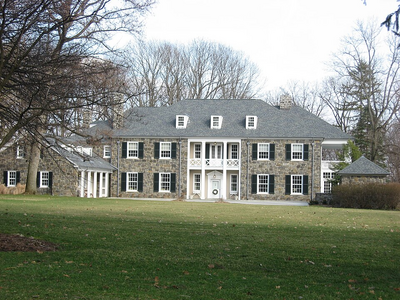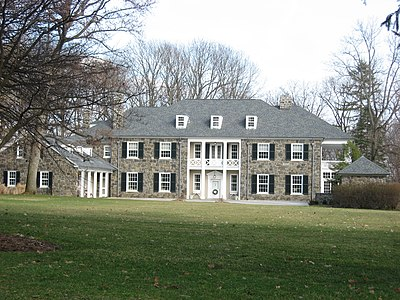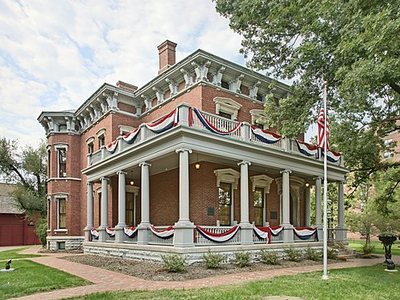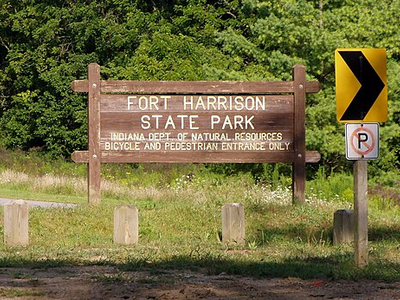
Lawrence is located directly on the eastern edge of Indianapolis and surprisingly offers a lot of pictures. The mix of urban green spaces and historical military installations often underestimates. I like the city because it is quiet enough to work concentrated, but at the same time provides enough contrasts to create exciting compositions. Here you will find concrete points of reference how to catch the best photo in Lawrence.
The first moment when the city lights begin to shine is the Civil Twilight. Directly after that follows Golden Hour – simply search for “Lawrence Indiana Golden Hour” in the calendar to plan the exact time. The Sunset about the silhouettes of the former barracks gives dramatic colors, especially if you have the skyline of Fort Benjamin Harrison in the picture. For long-term exposure, Blue Hour ideal; the cool blue lets lights emerge. The map tool of poi‐travel.de is embedded under this text and calculates the position of the sun, gives the direction as a line and displays the azimuth (horizontal angle) – practical if you need the exact angle of incidence of the light.
The park is the heart of Lawrence and offers wide fields, old military buildings and a lake that casts golden reflections at sunset. Particularly photogenic is the old barracks area with its brick buildings, which look almost silbrig in counterlight. Opening hours: daily from sunrise to sunset, free admission. Best photo time: Golden Hour at the western end of the lake, Blue Hour for the silhouettes of the bunkers. Insider tip: In the morning there are hardly any visitors, and the light is softer – perfect for landscape shooting.
A large, well maintained park with an artificial lake, playgrounds and a long promenade. The lake reflects the light of dusk and offers reflections that work especially at the Blue Hour. Opening hours: 6 am – 10 pm, free admission. Best photo time: Sunset above the lake, then the city lights in the water. Insider tip: Use the small café on the edge for a quick coffee and a tripod that you can leave there without blocking the paths.
A quiet place with a small monument, surrounded by ancient oaks. The light beams that break through the canopy create a beautiful Bokeh pattern – ideal for portraits or detailed images. Opening hours: 7 am – 8 pm, free of charge. Best photo time: Civil Twilight when the light diffuses and the contours become soft. Insider tip: In Autumn the leaves are red-orange, which strengthens the contrast to the gray stones.
A small but well-equipped park with a modern playground and a sculpture of recycled metal. The metal structure reflects the light of the Golden Hour particularly strongly, so you can create interesting light and shadow effects. Opening hours: 6 am – 9 pm, free admission. Best photo time: Golden Hour when the metal lights warm. Insider tip: On the weekend there are often local street food stands – a nice detail for lifestyle recordings.
A museum worthy of the history of Indiana veterans. The red brick façade offers a strong, structured motif, especially with lateral light. Inside there are well-lit exhibition pieces that are suitable for detail and portrait photography. Opening hours: Tuesday – Saturday, 9 am – 5 pm, admission $5. Best photo time: Civil Twilight for the exterior, Blue Hour for the illuminated interiors. Insider tip: Ask for a guided tour – the guides like to show hidden exhibits that give great photo motifs.
An open space with a large fireplace and a modern sculpture that is illuminated at night. The combination of flame light and artificial lighting creates dramatic contrasts, ideal for night photography. Opening hours: 24 hours, free admission. Best photo time: Blue Hour to late in the night when the fireplace delivers the main light. Insider tip: Bring a powerful lens (f/1.8) to capture the flames without too high ISO.
A natural fire trench in the forest that radiates a warm, almost mystical light at sunset. The surrounding trees form a natural frame that makes the image immediately more interesting. Opening hours: Daylight, free entrance. Best photo time: Golden Hour, when the fire dips into a soft orange. Insider tip: Early in the evening, the area is hardly visited so that you can try undisturbed long exposures.
Lawrence combines natural landscapes, historical buildings and modern leisure areas, so you can find interesting photo motifs almost every day and night. Whether you're looking for quiet green areas for landscapes or for urban silhouettes for night shooting – the city provides both without crowded tourist crowds. Pack your tripod, use the map tool for the position of the sun and enjoy the relaxed atmosphere that makes Lawrence a rewarding destination for photographers.
With the map tool, you can plan the ideal location for a photo online in advance – taking into account the sun's path and the surroundings.
Here's how it works:
Advantage:
You can assess light, perspective and location before visiting the site – ideal for photography, sunrises and sunsets.
To find the exact point where the sun disappears behind the skyline, use the azimuth display on poi-travel.de. In Lawrence, the sun travels further northwest below the horizon in summer, while in winter it takes a more southwesterly angle. With the embedded line on the map, you can determine your tripod position down to the metre.
| Phase | Characteristics | Top Attractions in Lawrence |
|---|---|---|
| Golden Hour | Warm, soft light shortly after sunrise or before sunset; ideal for landscapes and structures. | Fort Benjamin Harrison State Park, Explorer Park, Trails End Fire Bowl |
| Sunset | Direct, color-intensive light; long shade, dramatic colors. | Lawrence Community Park |
| Civil Twilight | Diffuses light after sunset; soft contours, ideal for silhouettes. | Oren Alexander Memorial Park, Indiana Military Veterans Hall of Fame |
| Blue Hour | Cool, deep blue; City lights emerge, good for night recordings. | Fort Benjamin Harrison State Park, Lawrence Community Park, Indiana Military Veterans Hall of Fame, Firecrafter Plaza |
| Photos | Settings (ISO/Blende/Zeit) | Professional tip |
|---|---|---|
| Fort Benjamin Harrison State Park | ISO 200 / f/8 / 1/125 s | Use tripod and wide angle lens to capture the reflections in the lake. |
| Explorer Park | ISO 400 / f/5.6 / 1/250 s | Select position so that the metal toy reflects the sunlight; Use counterlight measurement. |
| Trails End Fire Bowl | ISO 100 / f/11 / 1/60 s | Focus on the fire trench, use pole filters to darken the sky. |
| Lawrence Community Park | ISO 200 / f/4 / 1/200 s | use water as a mirror surface; Just keep horizon for symmetrical composition. |
| Oren Alexander Memorial Park | ISO 800 / f/2.8 / 1/30 s | Use open diaphragm for bokeh of light beams through the canopy. |
| Indiana Military Veterans Hall of Fame | ISO 400 / f/5.6 / 1/60 s | photograph laterally to emphasize the brick structure with shadow; Use tripod for long exposures. |
| Firecrafter Plaza | ISO 1600 / f/1.8 / 1/30 s | Use powerful lens to sharply capture the flames without increasing the image noise. |
However, it is worth a short trip to Indianapolis – the skyline in the evening throws long shadows over the Canal Walk, and the light on the water is a real treat for long-term exposures.
The Mono- Trail, which stretches through several suburbs, offers open fields and old railway stations; a perfect place to capture the seasons in the picture, especially when the grain shimmers golden in the summer.
A short trip to Bloomington brings the Indiana University Campus into play, but the actual highlights are in the nearby Lake Monroe: mirror-smooth surfaces, framed by dense forests, which in autumn show a colorful color play.
Brown County, about an hour south, sometimes seems overrun, but the remote paths in Brown County State Park let you discover lonely lights where the sunlight breaks through the leaves.
Columbus is a bit different – here the Art Deco building dominates, whose clear lines and geometric shapes are an interesting contrast to the usual rural motifs.
Madison on the Ohio River is quite relaxed; the old brick buildings on the river banks reflect the water, and at sunset dramatic silhouettes arise.
A detour to New Albany, just across the bridge to Louisville, gives you the opportunity to photograph the bridge itself – steel beams in counterlight, which is almost abstract.
For nature lovers, the Hoosier National Forest is a good destination; the dense forests and discarded paths offer countless possibilities for moody recordings, especially after rain.
French Lick may be known for his casinos, but the nearby caves and the surrounding forest area are an underestimated place for texture and light games.
In short, The surroundings of Lawrence are a patchy carpet of urban and rural scenes that all have their own photographic stimuli – just drive a bit further and squeeze the camera.
Villages, towns, districts, places and Vacation destinations you should visit.
©copyright by POI-Travel.de
info@poi-travel.de