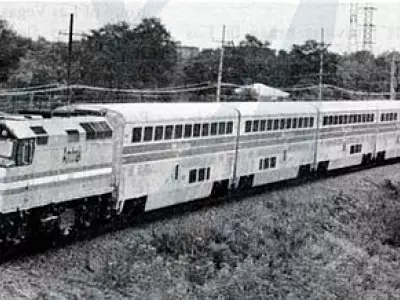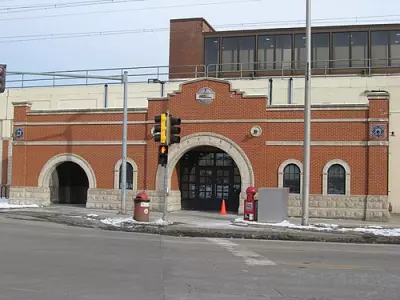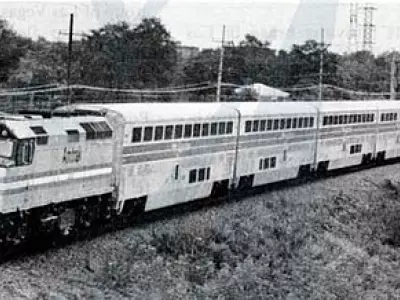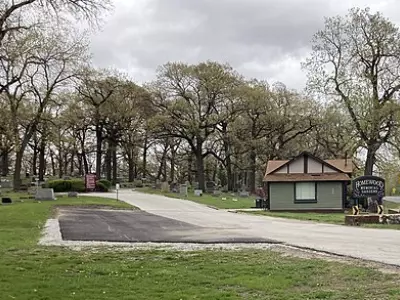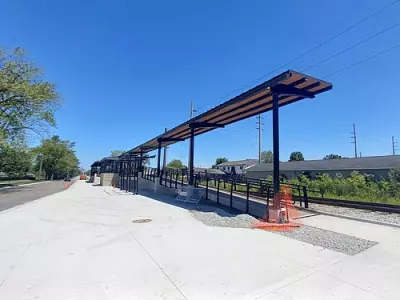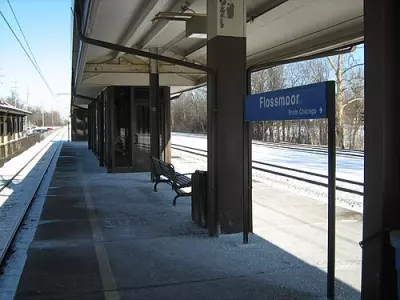
What makes Dolton sights so special is the silent story that pulsates between the suburbs of Chicago. I like to sit in the old railway shed on the edge of the village and imagine how in late 19. Century steam locomotives rolled in and out here, while farmers brought their carts to the market full of corn. The area belongs to the Thornton Township, which was founded in 1850 and has been a bit like an open book since then – each chapter a bit more dusty, every word a bit louder. Cook County has administration here, but the actual soul lies in the narrow alleys, the old wooden houses and the few but determined neighbourhood initiatives that hold the neighborhood together.
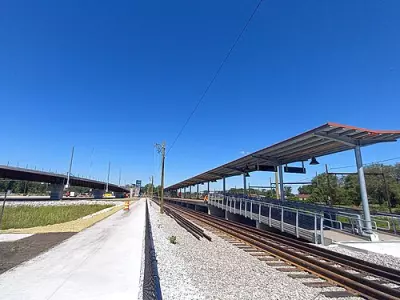
When I take the Metra to Blue Island and then take the bus back to Dolton in 157, I almost feel like a commuter from another time who randomly found the way to a place that smells not for tourists but for locals. I don't quite understand the hype around the big metropolises, but here, between the field roads and the small shops, I find a piece of authenticity that you can only read in guidebooks for "hidden jewels". And this is the true heart of the Dolton sights for me – a mix of rough history, friendly faces and a touch of unfamiliar Midwestern-Charm.
With the map tool, you can plan the ideal location for a photo online in advance – taking into account the sun's path and the surroundings.
Here's how it works:
Advantage:
You can assess light, perspective and location before visiting the site – ideal for photography, sunrises and sunsets.
To find the exact point where the sun disappears behind the skyline, use the azimuth display on poi-travel.de. In Dolton, the sun travels further northwest below the horizon in summer, while in winter it takes a more southwesterly angle. With the embedded line on the map, you can determine your tripod position down to the metre.
The first stop of my little Odyssey was Pullman National Monumentthat hides only a few miles east of Dolton and still spit out more history than you would expect in an entire day in downtown Chicago. I spent a rainy afternoon there, as I wandered between the old factory buildings and the restored workers’ houses – a bit like a walk through a lively history book, only without the dusty sides. Parking is usually a Klacks as long as you don't come on Friday night, then the field behind the visitor center suddenly becomes a battlefield for anyone who wants to get a free place.
A short jump over the railway bridge and you can find yourself in Chicago Museum of Science and Industry again, located in the heart of Hyde Park, but thanks to the direct metro line it is easy to reach. I have to admit, I was skeptical if the huge science museum is really something for someone like me who prefers to philosophize life in pubs. But the interactive U‐235 exhibition has completely changed me – I learned more about nuclear physics there than I would have ever received in a college course. And the best thing: parking in the museum is free when you park the car in the back service area, which is a real secret tip I rarely go on.
A bit further north, almost in the suburban feeling, lies the Chicago Botanic Garden in Glencoe. I spent a sunny Saturday there because I thought the gardens were just a little green space – wrongly thought. The thematic gardens, from Japanese to Mediterranean, are so artistic that you almost feel like landing in another world. The entrance is free, but parking costs a couple of dollars, and that's the only thing that has a bit of annoyed me because I'd rather get on foot or by bike. Nevertheless, if you are looking for a place where you can fill your Instagram story with real flowers, you are gold right here.
Just a short drive to the east leads you to Indiana Dunes National Park on the southwest coast of Lake Michigan. I have made a campfire on the beach, while the sun snuck over the dunes – a picture I still see in my head when I think about everyday life in Dolton. The park is huge, so plan enough time, otherwise you will miss the spectacular views of West Beach. Parking is well organised at the main entrance, but it can be filled quickly at the weekend, so it's better to be there early before the families move with picnic baskets.
Back near Dolton, but a bit away from the usual tourist paths, lies the Calumet Trail. I explored the trail on a lousy autumn afternoon while I drove with my old mountain bike over the flat fields and along the canal. The path is well developed and parking at the starting point is practically free – a real plus if you want to spontaneously decide how far you want to drive. The trail offers not only sports activities, but also a few hidden picnic places that hardly anyone knows.
Another urban jewel I could not leave is the 606 – Bloomingdale Trail. This rebuilt railway corridor has developed into a long, elevated green area that leads through several districts. I made a relaxed walk there while enjoying the sound of skateboards and street musicians – a mix of city life and nature that rarely harmonizes so well. Parking is limited at the entrances, but thanks to the proximity to several metro lines, the whole can easily be done by public transport.
So next time you think about what you could do in the area of Dolton, take a look at this selection: Pullman National Monument, Museum of Science and Industry, Chicago Botanic Garden, Indiana Dunes, Calumet Trail and 606. Every place has its own charm, and I promise you that after your visit you feel like you have a bit more of the region – even if you have to fight a few parking spaces. So, that was my personal tour through the best Dolton Attractions in the vicinity, and I hope you have some ideas about how to make your next trip.
This guide invites you to stroll with me through the inconspicuous but surprisingly charming Dolton – yes, just the small town in the Township of Thornton, which you would easily overlook if you don't accidentally walk along Highway 1 and suddenly see a sign with a laughing fish.
I must confess, my first highlight was that Dolton Historical Museum. Hardly one place connects the hard working-class history with a few dusty photo albums that are otherwise found only in dusty archives. There I hang my favorite posters on the wall – an old advertising poster for the Dolton Fire Department, which reminds me every time that the city has more fireworks than fireworks. Parking is usually easy, except on Saturday night, there will be a real problem because the annual “Firefighters’ BBQ” blocks the road.
A short walk (or a short sprint if you missed the bus) leads you to Dolton Public Library. I don't quite understand the hype about libraries, but here there is a small café serving the best black coffee in the area – no joke, that's almost better than what you get in the hip cafes of Chicago. The library also has a small reading room with local history books, which you can't find anywhere else, and the staff is so friendly that they even recommend a book about the history of the local can factory, if you are interested in industrial Nostalgie-Kram.
If you prefer to be in the fresh air, Miller Park Your goal. The park is not exactly a national park, but the playgrounds are clean, the basketball courts are well maintained and the small lakeside shore offers a place to enjoy the sun while you ask why no one here hosts a yoga retreat. I once made a picnic with friends and we made fun of Dolton’s “big” urban planning – that was really great because we were able to feed the ducks that apparently attract more visitors than most museums.
Another secret tip I barely tell anyone is that Dolton Community Center. There dance classes, senior groups and occasionally a karaoke evening take place, where the neighbors give their slanted singing skills to the best. I took part in a “80-pop workshop” in an accident and went home with a crooked “Take On Me” – no joke, that was a highlight I will never forget. The center has a small parking lot behind the building, which is usually free as long as you are not at the same time as the local scout group there.
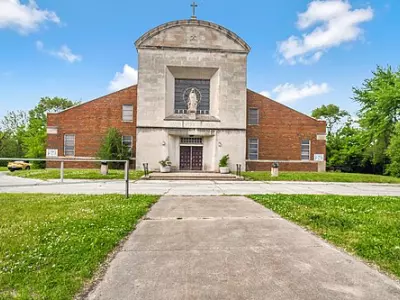
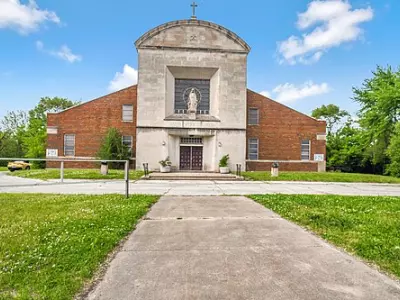
For those who seek a little spirituality, there are St John the Baptist Catholic Church. The church is not only a place for worship, but also an architectural gem with an impressive stained glass window that throws the light into the interior as if it were a film set. I took part in a choir sample there – that was a bit loud, but the voices were surprisingly good, and the community then invited me to a homemade apple cake. Parking is a bit tricky here, because the terrain is small, but a few free places you always find when you get early enough.
A short detour to Calumet River Trail completes the picture. The trail is part of the larger Great Lakes Trail and winds up along the river, where you can see some ducks and a few fishermen throwing their nets. I watched a sunset there once, while I thought why I shouldn't just stay in Chicago – but then I remembered the peaceful silence and the quiet stroller of the water, which is just better than the constant noise of the city. The trail is free, and parking on the trailhead is usually easy as long as you don't arrive at the weekend with a group of cyclists.
Of course, you must not forget that Dolton is a small piece of Illinois that has its own Dolton Attractions has not been found in any guide. I have experienced more than I would have ever expected – from dusty museum pieces to lively community events – and all this with a pinch of cynicism that makes the whole a bit more spicy. Next time you drive through the Township of Thornton, stop breathing in the air and let the little but fine details surprise you, make the Dolton a place you don't forget so quickly.
Villages, towns, districts, places and Vacation destinations you should visit.
©copyright by POI-Travel.de
info@poi-travel.de