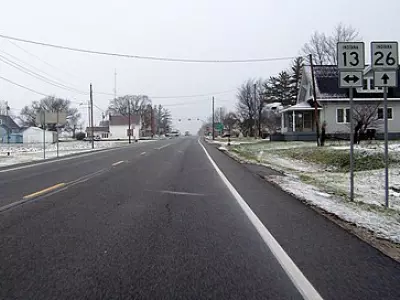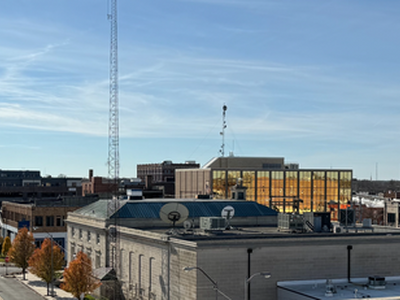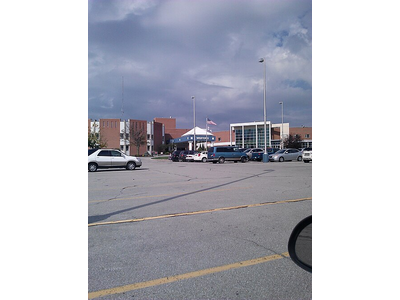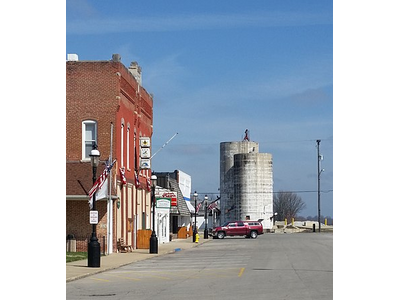
Greentown is located in the heart of Indiana and has a surprisingly lively small town atmosphere. I like the mix of historical brick buildings and wide fields – this gives every picture a clear context. For hobby photographers, the city is a quiet playground where you can experiment without crowds. There are also enough small details that make a picture really exciting.
I plan the shooting around the four most important light phases. In Civil Twilight the first city lights appear and give a gentle, diffuse light. The Golden Hour provides warm, soft light – a must for portraits in front of the historic town hall. The Sunset behind the few high houses on the outskirts creates dramatic silhouettes. In Blue Hour long exposures of illuminated roadways can be captured well. The map tool of poi‐travel.de is embedded directly under this text; it calculates the sun position, shows the direction as a line and indicates the azimuth (horizontal angle) – practically for the exact alignment of your camera.
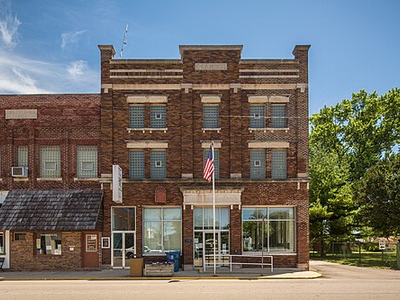
The museum is located in the restored old town hall and presents local history in original furniture and photos. The brick building with its striking watch tip is a classic photo motif spot, especially for counterlight during the Golden hour. Opening hours: Tuesday to Saturday, 10-17; Admission free, donations welcome. For the best picture, I recommend taking pictures from the opposite side of the road just before sunset – the light then falls beautifully over the facade. Insider tip: In the back garden there are old oaks that offer a great frame light in autumn.
The park is located on the outskirts of the city and offers a small lake, walks and a historic carousel. The water reflects the light of twilight, which is particularly impressive in the Blue Hour. Opening hours: around the clock, free admission. The lake is less visited in the early evening, so you can make long exposures without noise. A local note: If you use the small wooden ridge at the north end, you will get a nice foreground composition with the trees in the background.
The church from the early 20th Century impresses with its neo-Gothic lace and colored glass windows. The interior is a light playground when the sunlight falls through the stained glass windows – ideal for indoor shooting during the Civil Twilight. Opening hours: Monday to Friday, 9‐12 and 14‐17; Sundays only for services. Free admission, donation box at the entrance. For outdoor shooting, the south side is recommended at sunset; the warm light highlights the stone structure. Insider tip: The small cemetery behind the church offers quiet, moss-covered gravestones that look particularly atmospheric in the moonlight.
The red water tower is the unofficial landmark of the city and towers over the fields. It is a popular spot for silhouettes at sunset and for starry sky recordings in the Blue Hour. The tower is open to the public, but the surrounding field is freely accessible. Best time: shortly after sunset when the light shines behind the tower. Inside identification: If you use a tripod with a slight inclination, you can catch the tower together with the star tracks in the background.
The old station from the 1900s was converted into a community centre, but retains the original brick roof and the wooden platform. The rails and the old warehouse offer strong lines that are particularly emphasized in the Civil Twilight. Opening hours: Monday to Friday, 8-18; Free admission. For an image with long exposures, dusk is recommended when the light reflects from the windows of the depot. Insider tip: On the opposite side there is an old railway signal that gives a great silhouette motif in counterlight.
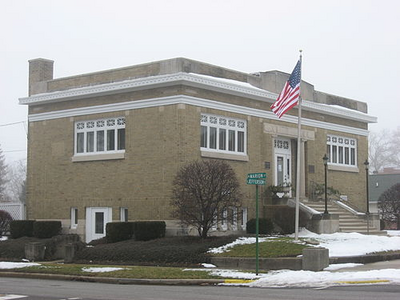
The library is a modern brick building with large windows and an inviting veranda. Inside there is a quiet reading corner with large windows that let in a warm, diffuse light during the Golden hour. Opening hours: Tuesday to Saturday, 9–20; Sunday 12-17 hrs.; Free admission. The west façade is ideal for outdoor shooting at sunset – the light makes the glass front shine. Insider proof: In the courtyard there is a sculpture made of recycled wood, which comes particularly well in the evening light.
Greentown combines historical buildings, open fields and friendly people, so you can use almost every hour of light for a strong picture. Whether you're looking for quiet city views, dramatic silhouettes or relaxed nature photos – the city provides the scenery. Pack your tripod, use the map tool for the sun position and enjoy the relaxed atmosphere that makes Greentown a perfect photo travel destination.
With the map tool, you can plan the ideal location for a photo online in advance – taking into account the sun's path and the surroundings.
Here's how it works:
Advantage:
You can assess light, perspective and location before visiting the site – ideal for photography, sunrises and sunsets.
To find the exact point where the sun disappears behind the skyline, use the azimuth display on poi-travel.de. In Greentown, the sun travels further northwest below the horizon in summer, while in winter it takes a more southwesterly angle. With the embedded line on the map, you can determine your tripod position down to the metre.
| Phase | Characteristics | Top Attractions in Greentown |
|---|---|---|
| Golden Hour | Warm, soft light – ideal for facades and interiors with natural light. | Greentown Historical Society Museum, Greentown Public Library |
| Sunset | Dramatic, laterally incident light – creates silhouettes and warm highlights. | Greentown Historical Society Museum, St. John the Baptist Catholic Church, Greentown Water Tower, Greentown Public Library |
| Civil Twilight | Gentle, diffuse light with first city lights – good for indoor and reflective surfaces. | St. John the Baptist Catholic Church, Greentown Train Depot |
| Blue Hour | Cool, blue tones – perfect for long-term exposures and reflective water surfaces. | Greentown City Park, Greentown Water Tower |
| Photos | Settings (ISO/Blende/Zeit) | Professional tip |
|---|---|---|
| Greentown Historical Society Museum | ISO 200 / f/8 / 1/125 s | Use light counterlight during the Golden hour and focus on the watch tip. |
| Greentown City Park (See) | ISO 400 / f/11 / 2‐4 s (Stativ) | Use the wooden web as the foreground; White balance on “wooded” for warm blue tones. |
| St John the Baptist Catholic Church | ISO 800 / f/5.6 / 1/60 s | photograph the colored glass during the Civil Twilight to capture the light play; Use Spot measurement. |
| Greentown Water Tower | ISO 100 / f/9 / 30‐45 s (Stativ) | Choose the silhouette shortly after sunset and add a 20 mm wide angle lens. |
| Greentown Train Depot | ISO 400 / f/4 / 1/30 s | Use the dusk to emphasize the reflective windows; a light swing gives dynamics. |
| Greentown Public Library | ISO 200 / f/5.6 / 1/80 s | Start the west façade at sunset; watch reflections in the big windows. |
However, a detour to Kokomo is worthwhile. The old factory hall at the Stadtpark has rusty metal carriers, which almost form a pattern in the morning light. In addition to the graffiti on the walls, there are some abandoned trucks that are good for contrasting shots.
In Marion you will find the old railway track, which stretches through the city centre. It's a bit overrun, but when you get there early, you can catch the empty tracks with the reflections in the rainwater. The brick buildings in the background give the whole a slightly nostalgic touch.
Nevertheless, you should not overlook the small streets of Peru. There are some weathered barns surrounded by field controls. The light that falls through the gaps in the wood creates interesting shadows – perfect for black and white photos.
A short trip to Muncie brings the famous Ball State Campus building into the picture. The combination of modern glass architecture and the old trees in the courtyard sometimes seems to be almost set, but with fog a almost mystical look is created.
In short, Anderson's city centre has a few abandoned warehouses that testify to graffiti and broken windows. The road is not always clean, but this gives the pictures a raw, unground character.
A little further south is Noblesville. There is the White River that winds through the city. Especially at sunset, the water reflects the silhouette of the old bridge – a classic, but still a good motive.
If you like nature, go to Tipton. The Tipton County Park has a small lake surrounded by trees that become a bit yellow in autumn. The water is often still, so you get clear reflections without much effort.
A stop in Warsaw is worthwhile for something unusual. The city is known for its ceramics, but the old factory buildings on the edge almost look like an abandoned set. The rough brick walls and the spicy light through the windows give a bit of industrial feeling.
Villages, towns, districts, places and Vacation destinations you should visit.
©copyright by POI-Travel.de
info@poi-travel.de